Your cart is currently empty
Gelada
In the Ethiopian Highlands
On the highlands surrounding Debre Libanos, the landscape opens up suddenly, vast and silent. High-altitude grasslands break abruptly into deep ravines, while the wind moves through the dry grass, carrying with it the scent of earth and dust.
It is a harsh, essential environment, where the human presence seems almost to dissolve into the immensity of the space.
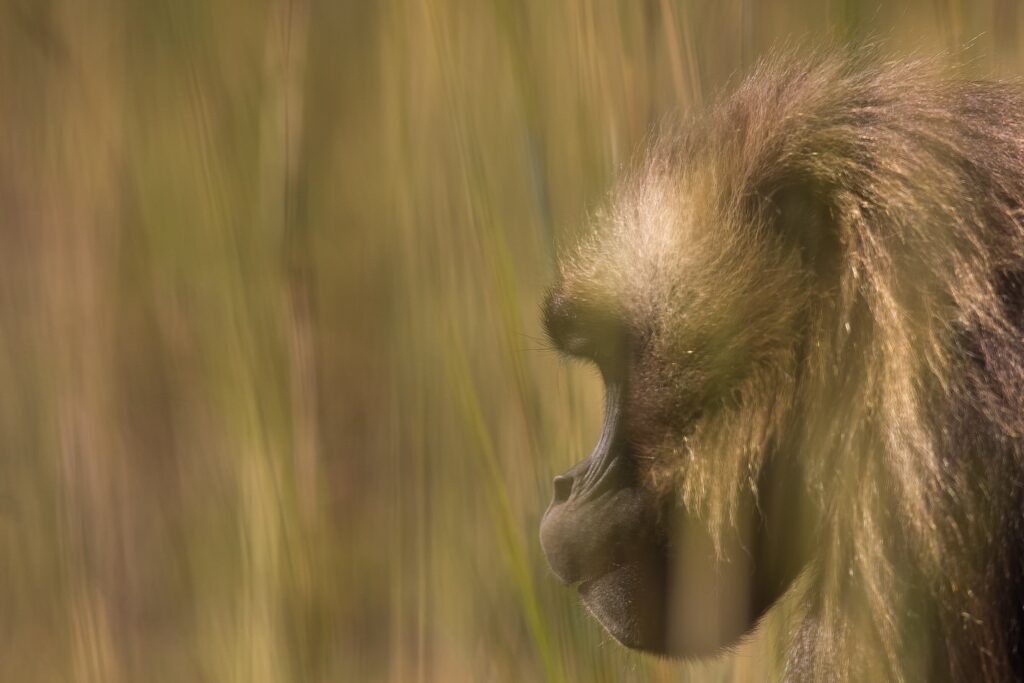
It is here, along the edge of the gorges, that the first movements appear. At first they are only shadows moving slowly across the slopes; then the morning light reveals increasingly defined forms: large groups of primates calmly grazing, seated among the tufts of grass as if they were part of the landscape itself.
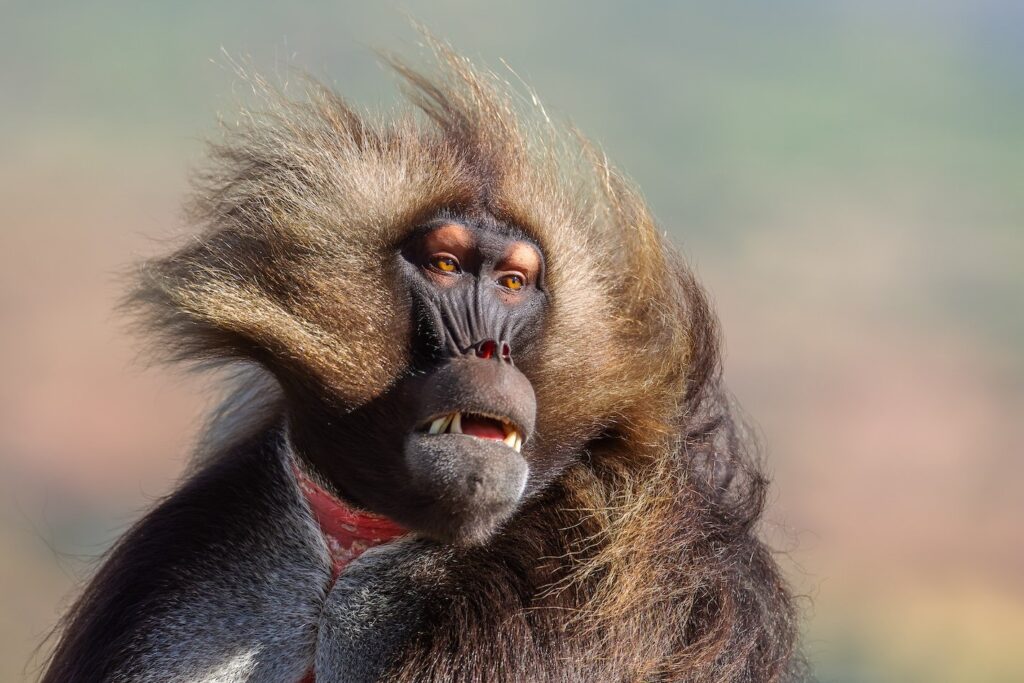
They are geladas, ancient inhabitants perfectly adapted to the Ethiopian highlands. Watching them move through these open environments conveys a deep sense of balance. Every gesture seems to be the result of a long evolutionary history, inseparably linked to the mountains.
Unlike most other African primates, geladas are mainly herbivorous and spend much of the day feeding on grasses, skillfully digging through the soil and low vegetation.
Their social behavior is complex and fascinating. They live in family units led by a dominant male, often accompanied by several females and their young. These units can gather in very large groups during feeding hours, creating true communities that move slowly across the landscape like a single living organism.
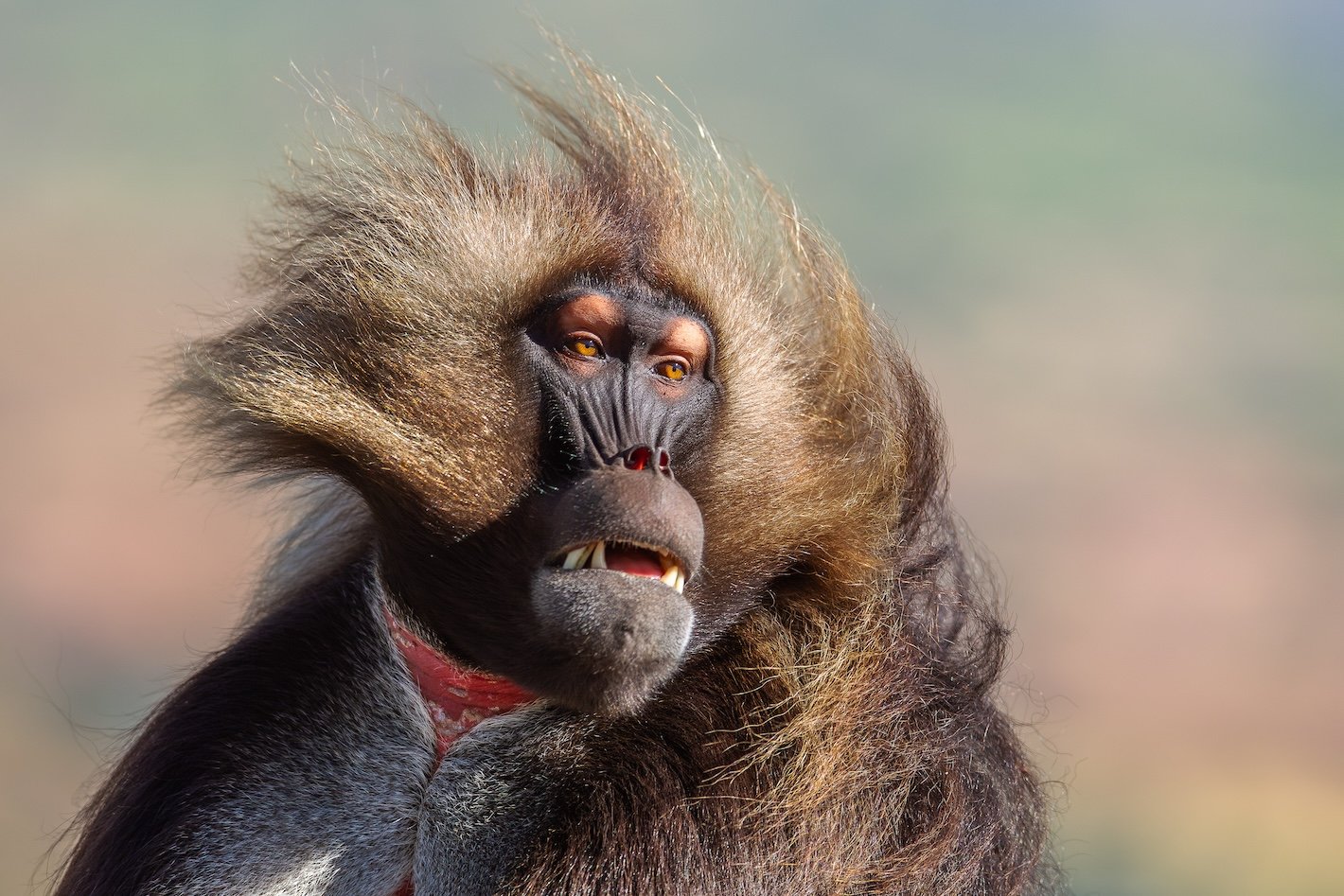
One of the most distinctive features of the species is the reddish, hairless patch on the chest, often referred to as the “bleeding heart”. This skin area, especially visible in adults, plays an important role in visual communication and in the social status of individuals within the group.
In the early hours of the day and at sunset, geladas move closer to the highland cliffs, which they use as natural refuges for the night. The steep rock faces offer protection from terrestrial predators and allow the group to maintain a dominant position over the surrounding territory.
Photographing them in these environments requires patience and adaptability. The light changes quickly, the wind raises dust, and the vastness of the space makes it difficult to approach without altering the natural balance of the scene. Yet this distance also helps create images in which the animals appear as an integral part of the landscape, almost shaped by the same force that carved the mountains.
In these highlands, time seems to follow a different rhythm. The wind, the moving clouds, and the slow steps of the geladas reveal a primordial dimension of wild life, where survival and harmony coexist in a fragile yet extraordinary balance.
Observing them means understanding how deeply some species are connected to the extreme environments in which they evolved. Protecting these ecosystems does not only mean safeguarding biodiversity, but also preserving natural landscapes that represent an essential part of our planet’s history.
Bring this moment into your space
If this photograph moved you, it is also available as a Fine Art print.
Each print is produced on museum-quality photographic paper, preserving the depth and balance of the original image.