Your cart is currently empty
Naumanni
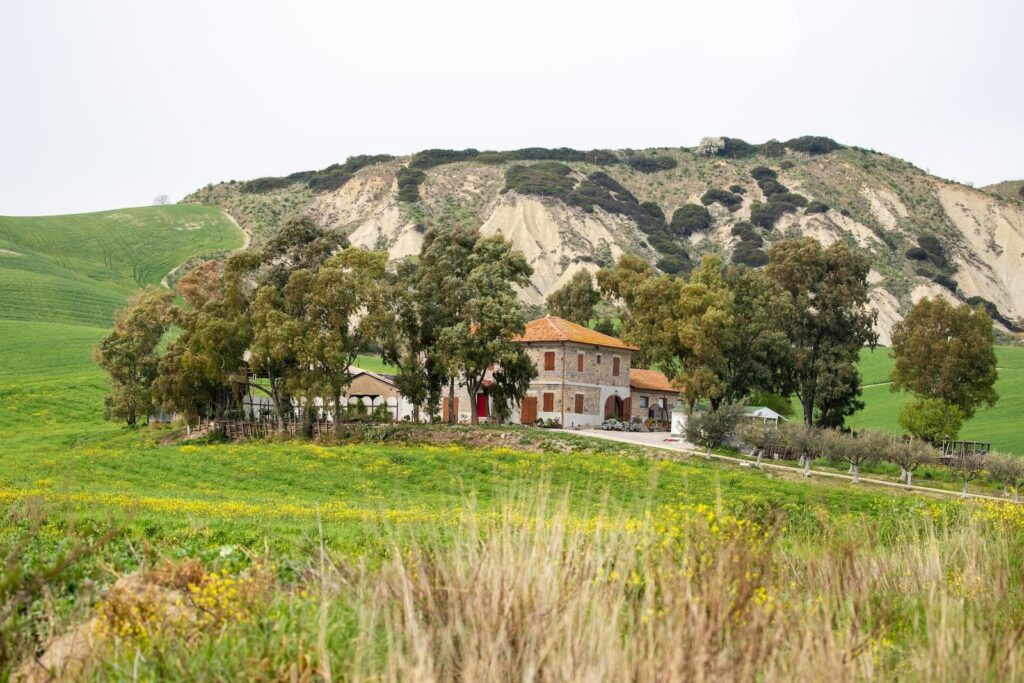
The “Villa” of the Falcons
In the quiet countryside near Tarquinia, there is a farmhouse where, every spring, the sky fills with small wings in motion.
Often, small gestures are the beginning of great stories. This is how Mother Nature works: even when immense spaces open beyond the horizon, she chooses simple, welcoming places in which to create new balances.
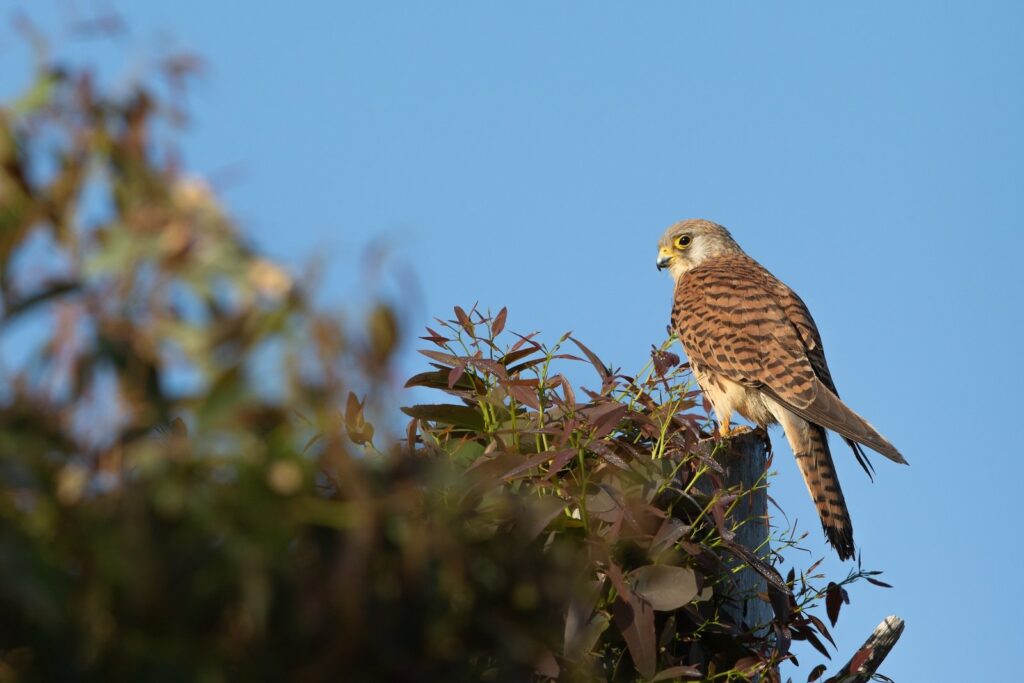
It is here that a small colony of lesser kestrels has chosen to return year after year.
Built in the early post-war years in Monte Riccio, the farmhouse was gradually abandoned and reclaimed by nature. For almost fifty years no one lived there, until in 2010 two young people, Bianca and Roberto, decided to bring it back to life.
During the restoration work, however, they made a surprising discovery: over time, the building had become a safe refuge for numerous bird species, which had chosen those silent walls to raise their young. Owls, barn owls, and falcons had transformed the farmhouse into a small natural sanctuary.
Among all these presences, the most unexpected was the lesser kestrel (Falco naumanni), a species found mainly in Southern Italy, with important colonies in Matera, Apulia, and Calabria, but rarely observed in Lazio. According to Dutch researcher Steve Hueting, the stable presence of this species in the region had never been documented except in occasional cases.
Lesser kestrels are migratory birds: every year they leave Europe to spend the winter in Africa, returning in spring for the breeding season. Bianca and Roberto’s challenge was to restore the farmhouse without disturbing the colony. With patience and respect, they learned to live alongside these small falcons, adapting the work to the needs of the species and creating small openings in the walls so the birds could continue nesting.
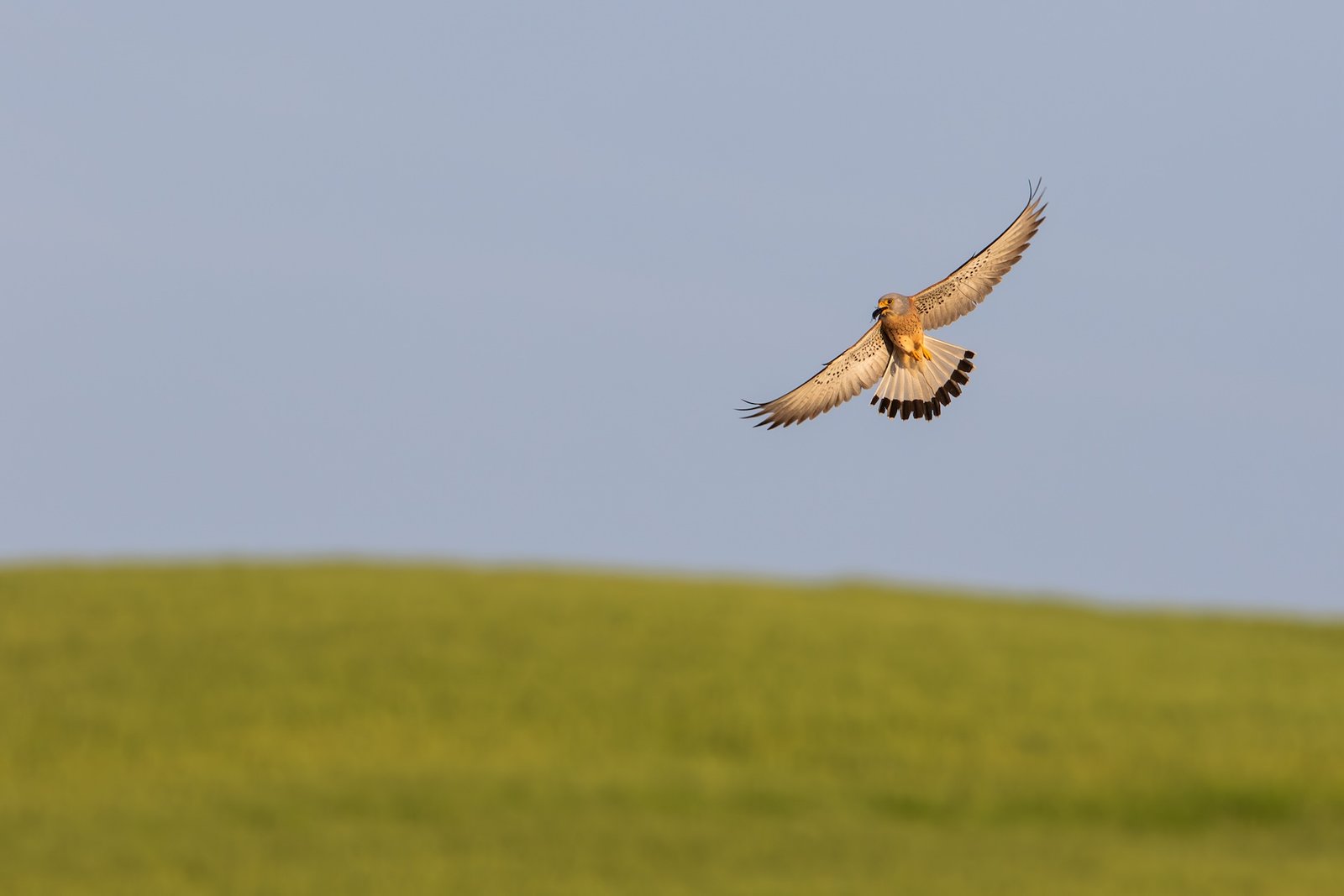
Their sensitivity produced extraordinary results: over the years, the number of kestrels grew season after season, eventually forming a colony of around forty individuals. The birds seem perfectly at ease in their new home, establishing an almost familiar relationship with Roberto, who says they recognize him when he calls them.
For this reason, the farmhouse was renamed Villa Naumanni. At the beginning of March, the countryside comes alive again with the first kestrels returning from their African wintering grounds. It is the season of calls and courtship flights. When the male finally finds a mate, the pair occupies the small gaps created in the farmhouse walls, where they lay and incubate their eggs.
After about thirty to forty days, the chicks hatch, covered in soft white down. Then begins the constant coming and going of the parents, busy feeding the new generation, while the sky above the farmhouse fills with light flights. Over time, the colony grew to the point that new spaces were needed: Bianca and Roberto therefore built small structures under the roof of the barn near Villa Naumanni, designed to host additional nests.
Today, Villa Naumanni is much more than a restored farmhouse: it is a shared refuge, where the rhythm of nature continues to mark the seasons and remind us that even the simplest choices can help protect the future of a species.
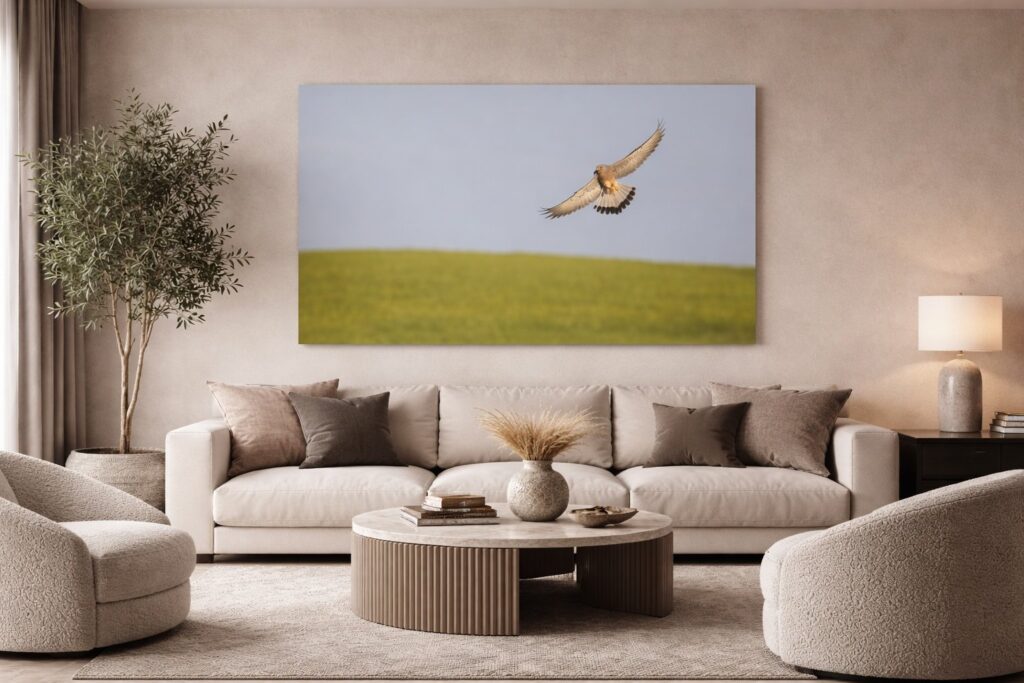
Bring this moment into your space
If this photograph moved you, it is also available as a Fine Art print.
Each print is produced on museum-quality photographic paper, preserving the depth and balance of the original image.